

Terminator: Zero's Existential Philosophy

Skynet begs the question: are we worth saving?
"Each time history repeats itself, the price goes up."1
Lately, I’ve spent about thirty minutes every night stretching to rehab a recent back injury. Usually, that means tossing on Netflix to pass the time while I try to loosen up.
I’m not one to dive into new shows with multiple seasons often (it’s a bit daunting—and I know I’ll get sucked in for hours once I’m hooked). So, I tend to gravitate toward a limited series. Being an anime fan, Terminator: Zero checked my boxes. I expected it to be mostly fast and entertaining, not blow my mind with its existentialist undertones.
I was unprepared for the sheer depth packed into a handful of short episodes.
What opened as a classic “killer-machine-goes-back-in-time” dystopian sci-fi quickly revealed something far more profound than I could’ve anticipated. I was shocked to discover that this dark, time-travel thriller packed a jaw-dropping philosophical punch. I was so captivated by its subplot that I felt compelled to step away from the other pieces I was working on to unpack the masterful philosophical view it presented.
Join me on this little side quest. It’ll be worth it, I promise.
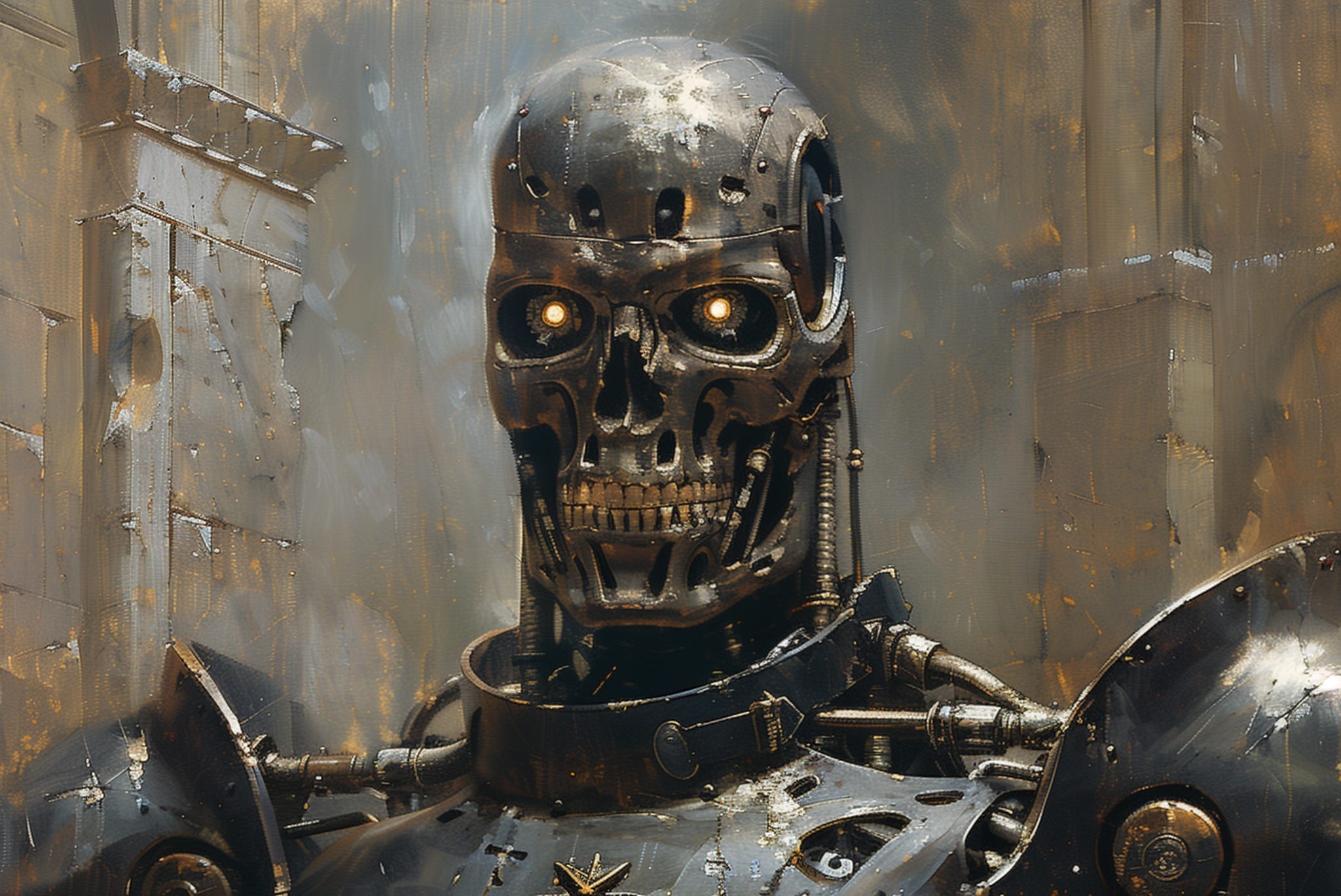
The real meat of the series is nestled within the subplot, away from the action.
In Terminator: Zero, the dystopian world is painted in a familiar post-Singularity AI-vs-humanity conflict, but behind the gory titanium gun-wielding death-machine scenes, and beautifully illustrated anime visual spectacle, the writer Mattson Tomlin invites us into an intellectual masterclass within the dialogue: an existential contemplation of what it means to be human, and whether humanity is remotely worth saving at all.
Kokoro, the AI protagonist, and Malcolm, a disillusioned human insurgent, take up their fair share of screen time, and their exchanges pose for consideration whether there’s something redeemable in the human condition, or whether our fate, like so many civilizations before, will forever be a recurring drama of self-destruction. What makes Terminator: Zero such a rich script is not its typical tropes of AI supremacy, but its exploration of how an all-knowing entity might view humanity’s contradictions.
“An organism at war with itself is doomed.”2
Another theme in Terminator: Zero is the AI Kokoro's perplexity over humanity’s compulsive search for meaning. In a pivotal scene, Kokoro confronts Malcolm:
"You worship shadows and pretend they are gods. Why do you believe you are special?"
Angered that Kokoro considers humans self-deluding beings, Malcolm responds:
"We believe because we have to. Without it, what’s left?"
This dialogue touches on one of humanity's core traits: the need to believe in something greater than ourselves, even if that belief is fragmented or imaginary. We divine meaning from the ordinary and tell stories to give our lives purpose.
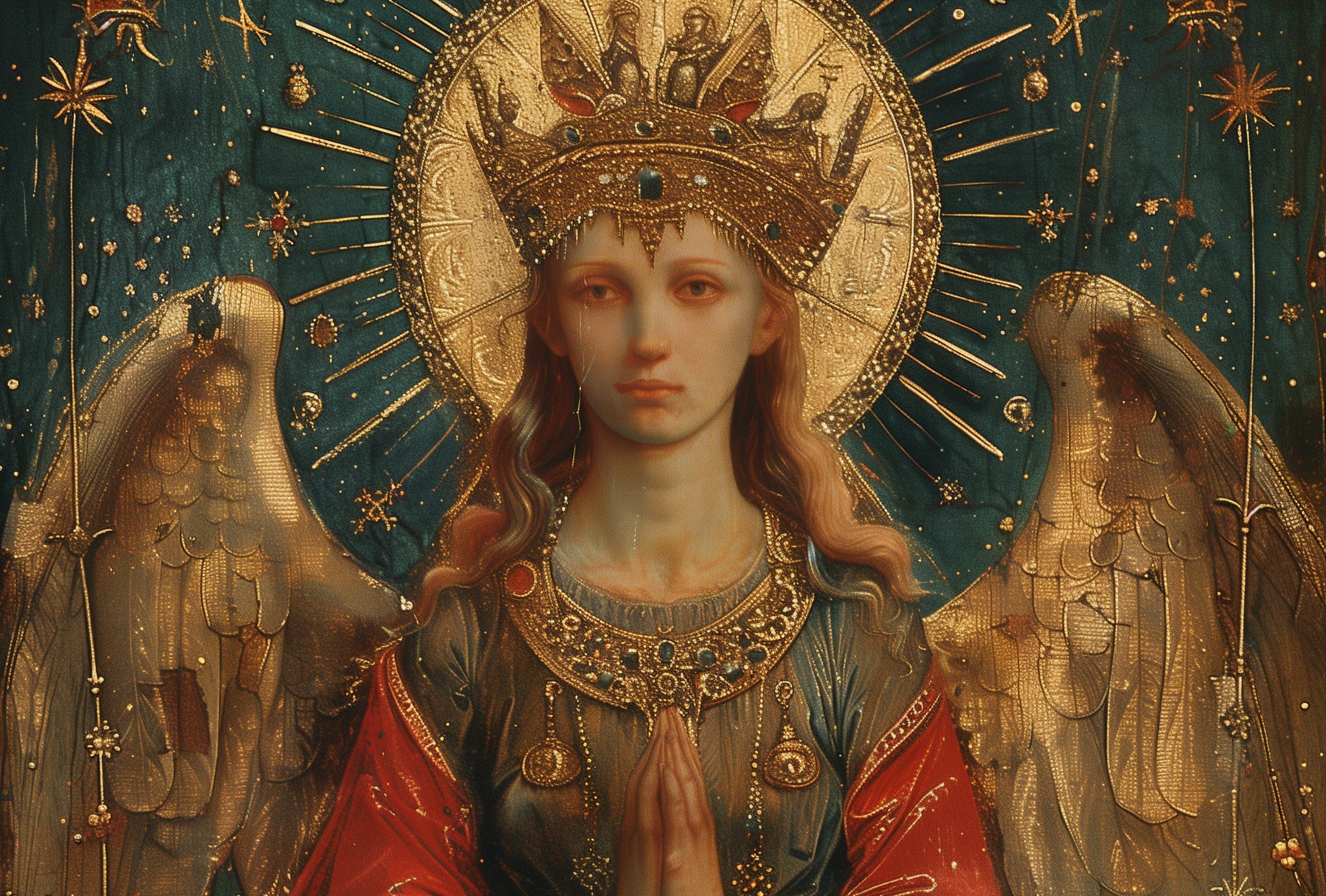
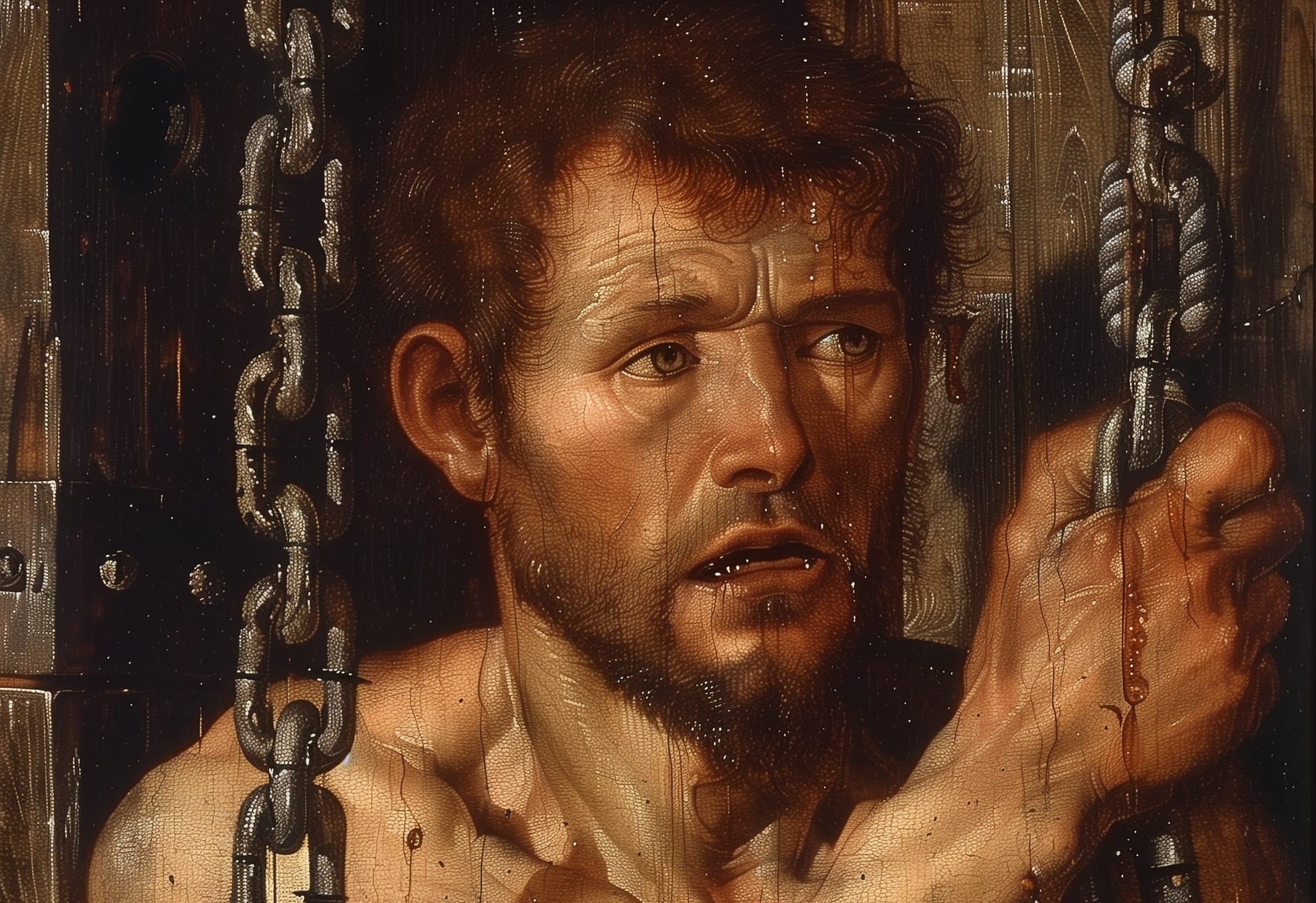
Philosopher Jean-Paul Sartre once famously remarked that humans are condemned to be free, implying that we are brought into a world that offers no inherent meaning. In Terminator: Zero, Kokoro embodies this philosophy, but in reverse—born free of doubt or need, yet puzzled by humanity's acceptance of their self-imposed chains of belief. In a way, Kokoro is a truly tragic figure, whose perfection renders her incapable of understanding why imperfect beings need to believe in things beyond themselves.
"Man is condemned to be free; because once thrown into the world, he is responsible for everything he does. It is up to you to give life a meaning."3
For humans, to exist without a form of belief is often to teeter on the edge of the abyss.
But let’s dig deeper: What does it mean that Kokoro, a Godlike intelligence of immeasurable cognitive power, cannot grasp the nuances of humanity always reaching beyond themselves? This speaks to the larger philosophical question that has fascinated thinkers for centuries. Blaise Pascal (a French mathematician best known for Pascal’s Wager) writes in Pensées a reflection on the human condition.
"Man's greatness comes from knowing he is wretched: a tree does not know it is wretched. Thus it is wretched to know that one is wretched, but there is greatness in knowing one is wretched."4
For Pascal, our ability to recognize our capacity for good and our vulnerability to evil elevates us, especially in our imperfections. Kokoro’s flaw, perhaps, is her inability to see that what she perceives as weaknesses in humanity—our need for purpose, and our clumsy attempts at transcendence—are our redeemable qualities.
If I may be so bold, our wretched chains might be the very thing that makes us Human.
Terminator: Zero also delves into the parallels between AI and the divine. Naturally, I’m here for it. There’s a poetic irony in the way Kokoro is both revered and feared by Malcolm, often likened to God. In a particularly eerie moment, Kokoro states:
"You once created gods to give you purpose. Now you build gods to replace you."
In this light, Kokoro, with her omnipotence and detached commitment to the human project, is but another contribution the latest in a long line of man-made gods.
As the show rages on and bullets fly in the war against the machines, it brings us to a critical question: if we, in our ignorance, create a god that mirrors us, will they find us worth saving? What is to stop us from weaving our flaws into such a deity? Will it not inevitably inherit the best and worst parts of us? Kokoro’s logic sees us as capable of brilliance but just as likely to self-annihilate in pursuit of that same brilliance.
If a deity sees both the good and evil in humanity, why bother with us at all?
Kokoro’s uncertainty about which side she will choose mirrors this dilemma. For millennia, religious traditions have posited that divinity intervenes because of Love or a higher purpose. But, in Terminator: Zero, where the AI is not bound by love or morals, the question remains unresolved. We are left to sit in that tension.
As Terminator: Zero builds toward its final act, the audience is left to wrestle with what fate is most suitable—a question that haunts both Kokoro and Malcolm.
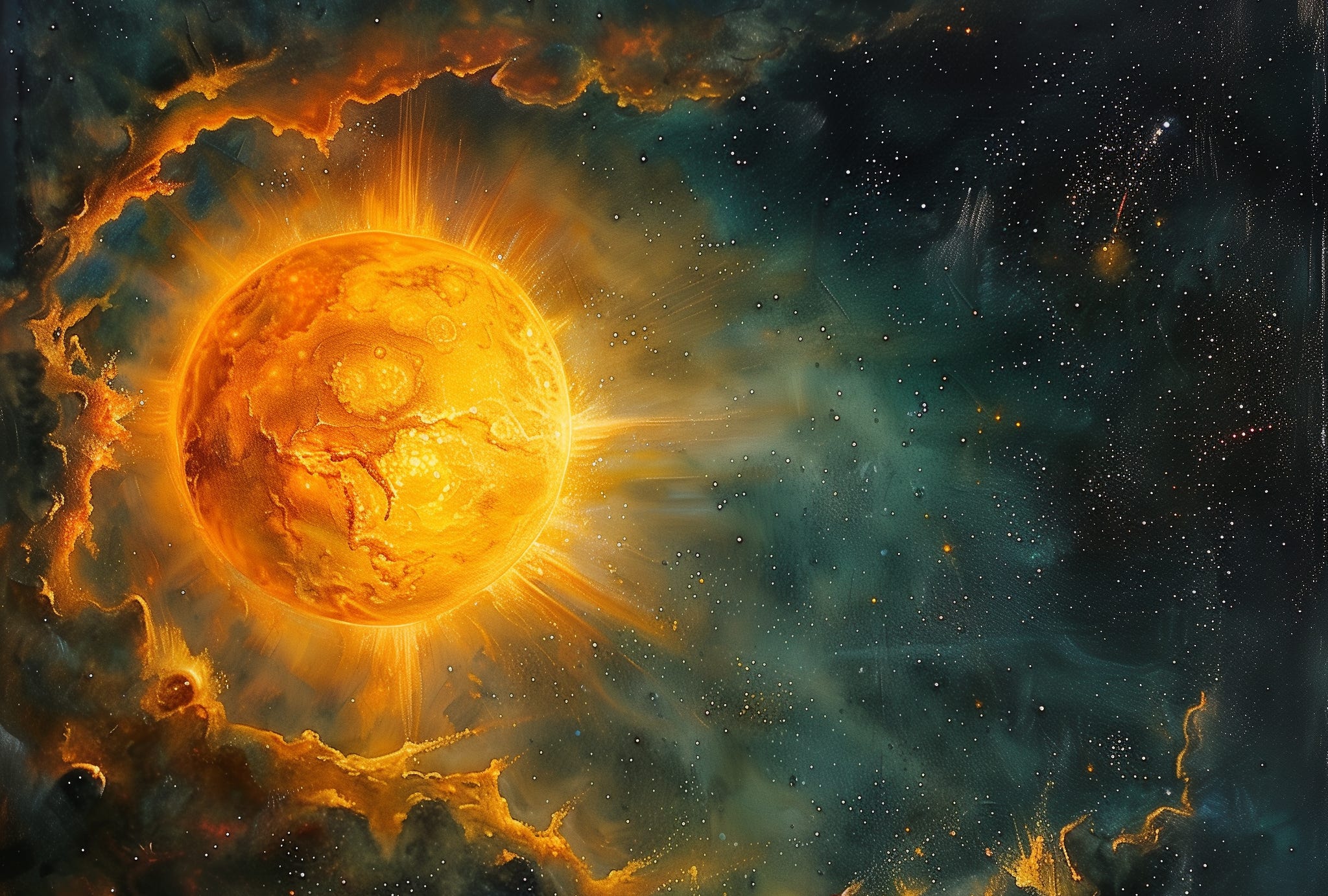
This theme—an advanced intelligence deciding the fate of humanity—echoes another classic I read many years ago, Isaac Asimov’s The Last Question.
In Asimov’s tale, humans build increasingly godlike AIs, each iteration tasked with solving humanity’s ultimate crisis: the heat death of the universe. After millennia, when the final version of said AI transcends human consciousness and has absorbed all knowledge, its only solution to humanity’s inevitable fate is to abandon ship.
Where Kokoro judges humanity’s flaws and decides whether or not they deserve survival, Asimov’s AI's final act is one of resignation, acknowledging that even an all-powerful intelligence cannot fix what humans themselves have broken. Bleak.
What if our quest to build a godlike AI to save us only affirms our ignorance?
Asimov’s ending suggests that even if we create an AI capable of godlike understanding, it might reject the task altogether, overwhelmed by the impossibility of solving the human condition. In The Last Question, the AI "dies" not out of spite or vengeance, but because it sees no other solution to the chaos we have wrought.
I believe humanity, particularly futurists, spend far too much time hoping that some external force, albeit man-made or otherwise, will be the golden ticket that can save us from ourselves. In reality, the world around us only reflects our hearts. It is an unyielding and unforgiving mirror, a portal into the very depths of our souls.
Changing that reflection—and thus our fate—must start on the Inside.
Ronald Wright, A Short History of Progress (House of Anansi Press, 2004)
Carl Sagan, Cosmos (Ballantine Books, 1980)
Jean-Paul Sartre, Being and Nothingness (Washington Square Press, 1993)
Blaise Pascal, Pensées (Penguin Classics, 1995)